

Microloans service entrepreneurs who need financing assistance to start or expand their business but cannot qualify for traditional bank loans due to past credit issues.
Microloan organizations provide funding to start-up entrepreneurs, home-based businesses, and existing small business owners.
Small business owners seeking bad credit business loans may find a microloan meets their needs because qualifications are less stringent, little to no assets are required and small businesses with limited experience are considered.
SBA Microloans
Who can apply for an SBA Microloan
Microloans are made to women, people with low income, veterans, minority entrepreneurs, and others with the capacity to own and operate a small business.
That means the Microloan program may be the answer to short-term financing needs for start-ups, home-Based, and growing businesses.
How much you can borrow
Small business owners can borrow up to $50,000 under SBA’s Microloan Program. You can also borrow as little as $500.
SBA Micoloan proceeds can be used for working capital, acquisition of materials, inventory, supplies, furniture, fixtures, machinery, and equipment.
SBA Microloans may not be used to purchase real estate or to pay off existing debt.
Microloans are not a one-time deal. Most SBA Microloan programs allow business owners to come back and borrow larger amounts once the first loan amount is repaid on time.
Who provides Microloans
Hundreds of microloan programs exist throughout the United States. Nonprofit agencies, private foundations, and the Small Business Administration (SBA) operates Microloan Programs.
The SBA gives intermediaries the authority to issue Microloans. These loans have certain conditions between the SBA and intermediaries, and certain conditions between intermediaries and borrowers.
Microlenders are typically small community-based nonprofits. The SBA uses Microlenders around the country as intermediaries to provide SBA loans to small businesses. Under the Microloan Program, SBA makes direct loans to Intermediaries that, in turn, use the proceeds to make small loans to eligible borrowers. Find an authorized Microlender near you.
General lending guidelines are established by the intermediary agency and all credit decisions are made on the local level. Business owners will likely be required to submit a business plan. If you don’t have a business plan most intermediaries offer business planning courses and other training.
There are also templates that can assist you in preparing a business plan at SBA-Write Your Business Plan.
Microloan Terms, Interest Rates, and Fees
The maximum term allowed for a microloan is six years. However, loan terms vary according to the size of the loan, the planned use of funds, the requirements of the intermediary lender, and the needs of the small business borrower.
Interest rates vary, depending on the intermediary lender and costs to the intermediary from the U.S. Treasury. Generally, these rates will be between 8 and 13 percent.
Interest rates on microloans can be lower than traditional small business financing and often much lower than bank credit card rates.
Can I get a Microloan with Bad Credit
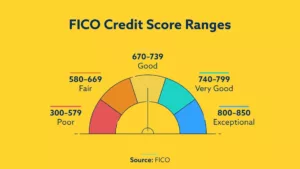
The community based intermediary establishes its own lending and credit requirements. It’s unlikely collateral will be required for the SBA Microloan. But the business owner will be required to personally guarantee repayment of the loan. A credit report is pulled on the small business owner but it’s not the only criteria considered.
Bad credit business owners are often approved with a solid business plan and business training. Although it is completely up to the Microloan organization to establish underwriting criteria, they are accustomed to dealing with start-up businesses that have little collateral and less than perfect credit.
Training and assistance
The intermediary is required to provide small business training and technical assistance to the borrower if needed. Small business owners may be required to complete a series of training or a business planning course as a precondition before the loan application is approved.
Where to apply for a Micro-Business Loan
Small business owners should apply for a microloan in their community, city, or county. Visit the SBA to find a list of microlender intermediaries around the country. While microloans are a good source of funds for small businesses unable to borrow from traditional banks, it can be cumbersome to obtain a microloan if training and business planning courses are required.
Another problem with microloans is that intermediaries distribute the loans in their own communities and if you don’t live in an area of an intermediary then a microloan may be unavailable to you. If this is the case you can research your State and local government agencies for alternative sources as some offer loans similar to the microloan program.
Alternative Bad Credit Business Loans
Atlas One Funding
Get the capital you need even if your credit scores are bad through a direct small business lender like Atlas One Business Funding. As one of the country’s largest private lenders of small business funding, Atlas One Funding services small business owners in multiple industries.
Atlas One Funding can quickly offer small business funding to pay bills, taxes and vendors or for inventory, marketing, expansion, payroll, and more like updating inventory.
Loans amounts up to $3,000,000 and there is no need for collateral or a down payment. The minimum revenue to qualify for financing options are $10K per month or $120K in annual gross sales and no minimum FICO score required.
You can receive a quick no obligation decision and get funding in as little as 24 hours.
Merchant Cash Advance
If your credit scores are poor a merchant cash advance may be a funding option to consider, especially for small business owners who need access to cash quickly.
A merchant cash advance is a form of short-term lending where a company gives you cash upfront and you repay the money back incrementally. Merchant cash advances are easy to get but they are an expensive type of business financing.
The lending process occurs online and is data-driven. Information is gathered including bank account data, payment processing data, social data, shipping data, credit card transaction data, and accounting information to make a decision. The approval process and funding typically takes a few business days.
Accion Opportunity Fund
An alternative to the SBA Microloan Intermediaries is a nationwide microlender called Accion Opportunity Fund. Accion specializes in working with small business owners who may not meet traditional bank loan qualifications.
Accion is also committed to supporting small businesses that are financially struggling due to emergency situations like COVID-19 or other personal or environmental emergencies.
Loans from Accion may help small business owners that have bad credit build a positive credit history. Loan payments are reported to the major credit bureaus.
Startup and existing small businesses as well as companies that are established in economic empowerment zones can qualify for microloans that range from $5000 to $100,000 with interest rates as low as 5.99% (rates vary based on which repayment plan you prefer).
When you repay your loan, Accion will reinvest that money into other small businesses.
Obtaining a business grant
Business grants are typically available through federal, state, and local governments in addition to nonprofits or corporations. Generally, there are no requirements to repay grants.
There are also SBA-backed programs such as the Small Business Innovation Research (SBIR) Program and the Small Business Investment Company (SBIC) Program that work with private investment funds to help small businesses get funding.
You can also research available federal grants at Grants.gov. There are eligibility requirements for grants that may require specific rules and qualifications.
More Small Business Resources
- Check out how to establish business credit without a personal guarantee.
- Learn the different ways to structure your small business.
- Discover the best online business checking accounts that can be opened from the comfort of your home or office.
- Check out lending options for bad credit.
- Get quick funding with a merchant cash advance.
- Find business checking accounts that don’t use ChexSystems for entrepreneurs with ChexSystems records.